
Juna Mahal — Reinterpreting Architecture, Painting, and Glass Craft
- Authors
-
-
Laxman Lal Sargada
Shri Govind Guru Government CollegeAuthor -
Kratika Kansara
Author
-
- Keywords:
- Juna Mahal, ornamentation, cultural, artistic, architectural, painting
- Abstract
-
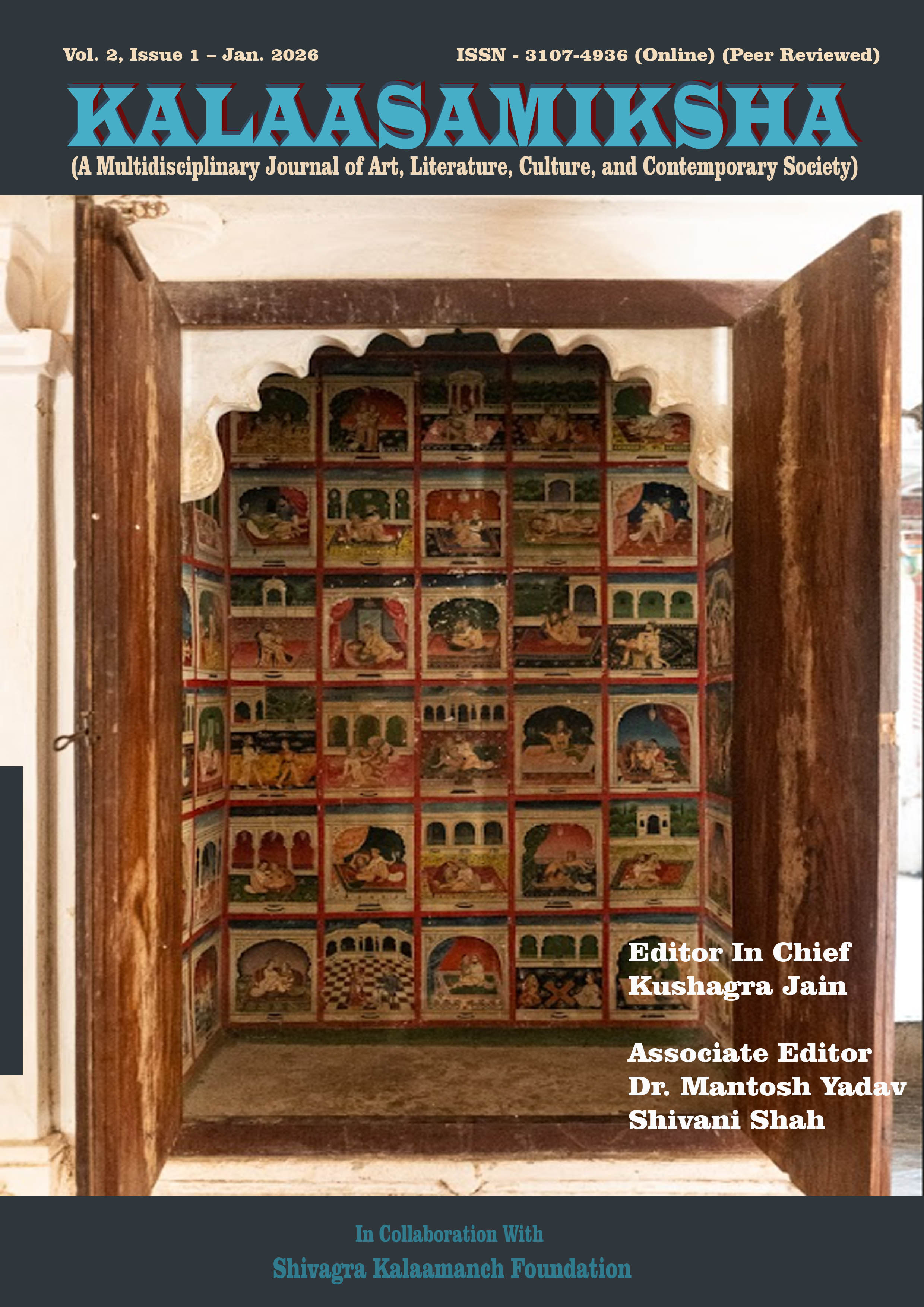
Junā Mahal is a very important example of Rajasthan’s rich historical and cultural heritage, recognized as a remarkable blend of architecture, painting, and glass craftsmanship. The mural paintings of this palace are its most significant feature. These paintings depict religious stories, hunting scenes, battle episodes, royal life, and romantic themes with great detail and emotional depth. This artwork not only showcases beauty but also clearly reflects the social structure, cultural traditions, and worldview of that time. In particular, the romantic (shringara) paintings present human emotions and the deeper aspects of love with artistic dignity, making it comparable to a cultural text.
Glass and mirror work is another unique feature of this palace. The inlay of small mirrors on the walls and ceilings creates an effect where light is divided into thousands of reflections, illuminating the entire room.
- References
-
1. व्यक्तिगत सर्वेक्षण
2. महेश पुरोहित, डूंगरपुर (राजस्थान) द्वारा लिखित "हिस्ट्री ऑफ जूना महल" पर आधारित
3. https://www.remoteasiaphoto.com/photo/juna-mahal-erotic-paintings-cupboard/
4. https://commons.wikimedia.org/wiki/Category:Kamasutra_paintings_in_Juna_Mahal,_Dungarpur#
5. मल्लिका बोहरा - डूंगरपुर राज्य की भित्ति चित्रांकन परम्परा समाज एवं सांस्कृति प्रतिभा प्रशाशन, नई दिल्ली-2009,
6. डाँ. आर के वशिष्ठ: मेवाड की चित्राळूज परम्परा
7. डॉ. निर्मला जैन, रस सिद्धान्त और सौन्दर्यशास्त्र
- Cover Image
-
- Published
- 2026-01-31
- Section
- Articles
- License
-
Copyright (c) 2026 Laxman Lal Sargada (Author)

This work is licensed under a Creative Commons Attribution-NonCommercial 4.0 International License.

How to Cite
Most read articles by the same author(s)
- Laxman Lal Sargada, Chanda Damor, Rajasthani Pottery: The Artistic Heritage and Vibrant Tradition of Clay , KALAA SAMIKSHA: Vol. 2 No. 01 (2026): KALAA SAMIKSHA
Similar Articles
- Dr. Rajkumar Pandey, The Role of Indian Iconography: Symbolism and Cultural Significance in Architecture, Sculpture and Painting , KALAA SAMIKSHA: Vol. 1 No. 07 (2025): KALAA SAMIKSHA
- Divishtha Rathore, Reimagining Tradition in Indian Art:The Intersection of Cultural Heritage and Modern Trends , KALAA SAMIKSHA: Vol. 1 No. 05 (2025): KALAA SAMIKSHA
- Neelkanth Nigam, The Rise of AI in the Creative Industry: Threat or Opportunity for Human Artistry? , KALAA SAMIKSHA: Vol. 1 No. 05 (2025): KALAA SAMIKSHA
- Laxman Lal Sargada, Chanda Damor, Rajasthani Pottery: The Artistic Heritage and Vibrant Tradition of Clay , KALAA SAMIKSHA: Vol. 2 No. 01 (2026): KALAA SAMIKSHA
- Ayushi Jain, Literature and Linguistic Diversity: A Gateway to Cultural Understanding , KALAA SAMIKSHA: Vol. 1 No. 05 (2025): KALAA SAMIKSHA
- अविनाश काटे, कलालोक - मंगल की श्रेष्ठ्य शक्ति , KALAA SAMIKSHA: Vol. 1 No. 05 (2025): KALAA SAMIKSHA
- कुशाग्र जैन, लियोनार्डो दा विंची: पुनर्जागरण युग का सार्वभौमिक प्रतिभा , KALAA SAMIKSHA: Vol. 1 No. 02 (2025): KALAA SAMIKSHA (PRE ISSN)
- Arpit Srivastava, Engaging Indian Youth with Heritage of Traditional Games including Board Games for Revitalization in Digital Gaming Era , KALAA SAMIKSHA: Vol. 1 No. 05 (2025): KALAA SAMIKSHA
- कुशाग्र जैन, कला में श्रम की गरिमा : श्रमिक दिवस पर एक विशेष चिंतन , KALAA SAMIKSHA: Vol. 1 No. 02 (2025): KALAA SAMIKSHA (PRE ISSN)
- अशोक मेनारिया, भित्ति चित्रण का सौंदर्यीकरण में योगदान , KALAA SAMIKSHA: Vol. 1 No. 04 (2025): KALAA SAMIKSHA (PRE ISSN)
You may also start an advanced similarity search for this article.